
About this reference

A coastal lighthouse record built for careful reading, shared memory, and place-based understanding.

Northern Coast Lighthouses exists to bring archival photography, keeper accounts, and preserved tower records into one readable public reference. We document what can be verified, note where stories diverge, and keep geography central so visitors can move from narrative to shoreline context.

Explore the map Read keeper stories

Editorial principles

  • Source-first documentation

    Entries are grounded in logbooks, registry notes, local records, and credited archival collections.

  • Human context with restraint

    Keeper stories are included where evidence exists, with clear distinction between documented fact and oral recollection.

  • Geography as structure

    Every record is tied to location, helping readers connect chronology, architecture, and coastline conditions.
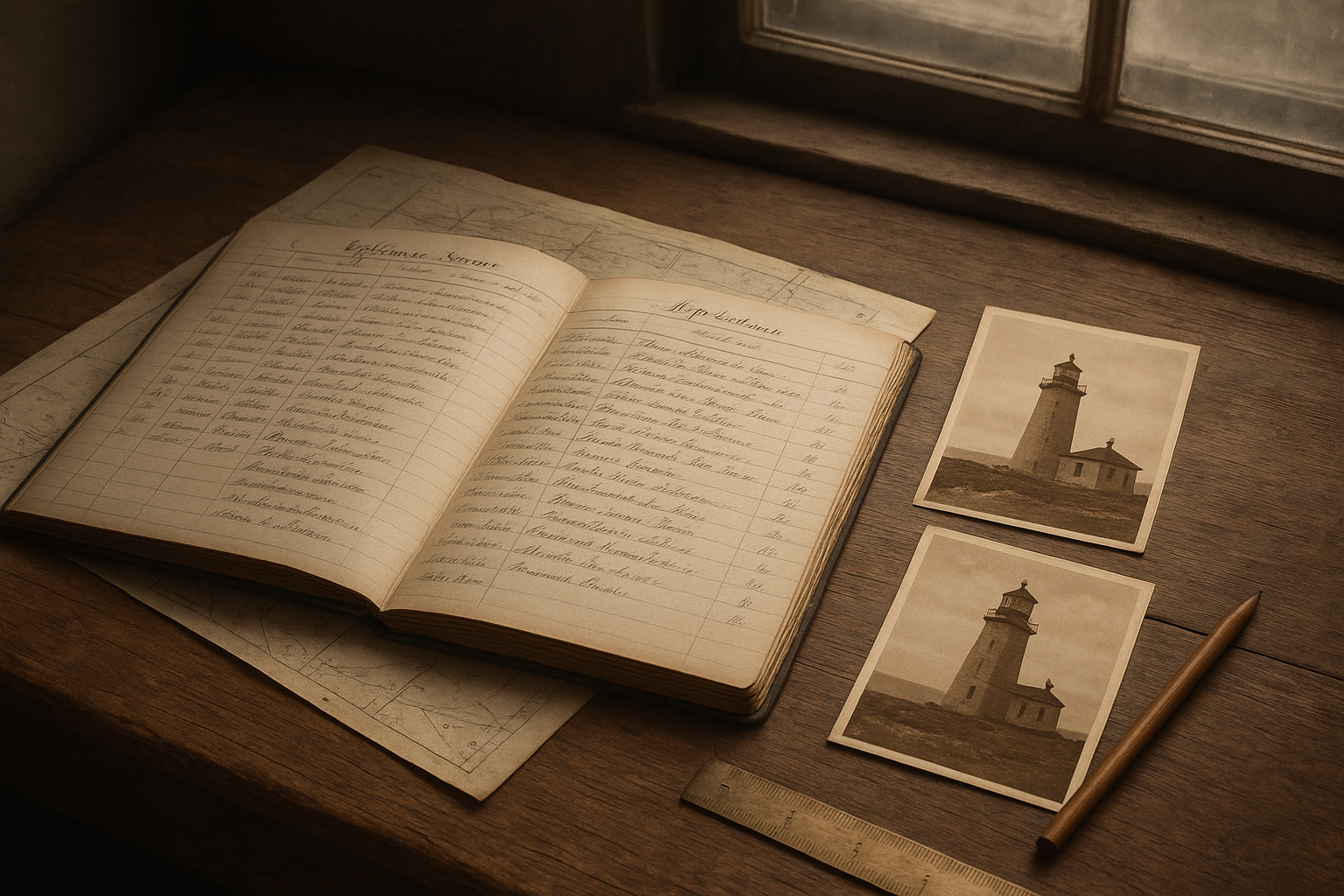
Open archival ledger with handwritten coastal lighthouse entries, sepia photographs, and navigation notes on a wooden desk
Field notes, registry excerpts, and annotated prints form the basis of each profile.

Research FAQ

How to read this lighthouse record

These notes clarify the scope of the collection, how sources are handled, and how preserved towers are used as historical anchors. For location-first browsing, start with the map guide; for narrative material, continue to keeper stories.

What historical period does the site cover?

The core timeline runs from the first documented coastal lights in the late eighteenth century through late twentieth-century automation, with occasional earlier coastal references where records are reliable.

How should I interpret archive photographs?

Images are presented as historical evidence first: framing, grain, and wear are retained whenever possible. Captions note known date, location, and source certainty so visual details can be read in context.

Where do keeper accounts come from?

Keeper narratives are compiled from logbooks, station correspondence, local newspapers, and recorded oral history. Entries distinguish direct quotations from editor summaries and flag uncertain attributions.

Why emphasize preserved towers?

Surviving structures provide fixed reference points for comparing plans, photographs, and written reports over time. The focus supports verifiable interpretation rather than reconstructed or purely promotional narratives.

How can I use the site as a reference source?

Begin with the map to locate a tower, then cross-check its profile with archive images, timeline notes, and story citations. For teaching or research, cite the page title, tower name, and listed source references together.